Why Myositis India Exists: The Role of a Healthcare NGO in Rare Disease Care
Learn about Myositis India, a dedicated NGO focused on improving care and awareness for rare diseases, empowering patients and their families.
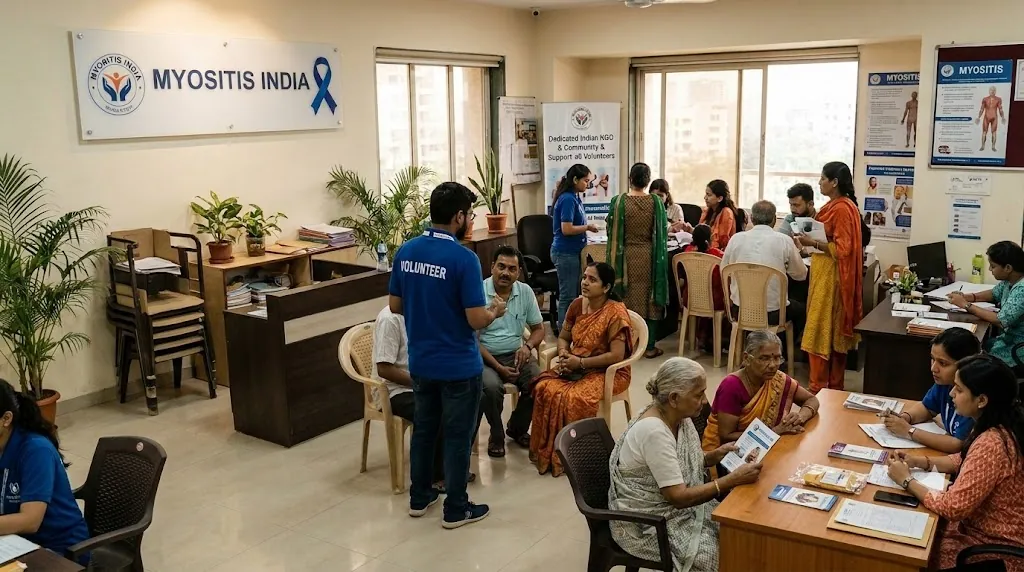
A rare disease can create challenges that extend well beyond symptoms. Patients may need to navigate unfamiliar medical terminology, locate the right specialist, understand treatment options and find emotional support while managing everyday responsibilities.
This is where patient advocacy organisations can make a difference. In India, where rare disease care involves questions of awareness, access, research and affordability, the role of a healthcare NGO can complement the work of doctors and hospitals.
Why Are Patient Support Organisations Needed?
Rare diseases can be difficult to diagnose because their symptoms may resemble more common conditions. Specialist experience and diagnostic facilities may also be unevenly available.
The Government of India's National Policy for Rare Diseases, 2021 recognises barriers such as limited awareness, inadequate diagnostic facilities, challenges in research and the high cost of treatment. It sets out a policy framework addressing prevention, diagnosis, research and access to care.
Even when medical services are available, patients may need help understanding where to seek care and how to find trustworthy information. Patient organisations can help address some of these practical and informational needs.
What Is Myositis?
Myositis refers to inflammation of the muscles. Several forms are associated with autoimmune processes and can cause progressive muscle weakness. Depending on the subtype, other symptoms may include skin changes, swallowing difficulties or lung involvement.
Diagnosis may involve a clinical examination, blood tests, imaging, electromyography and, in selected cases, muscle biopsy. Treatment depends on the specific form of myositis and the organs affected.
Because myositis is relatively unfamiliar to many people, patients may benefit from an organisation that focuses on this condition rather than rare diseases in general.
Why Myositis India Was Established
Myositis India, a unit of the Madalasa Foundation, was established to improve awareness, support and research relating to myositis in India. Its stated aims include providing reliable information, connecting patients and caregivers with healthcare professionals, promoting research and advocating for the needs of the myositis community.
Its work addresses several needs that may arise between diagnosis and long-term management.
1. Making Reliable Information Easier to Find
Patients often encounter conflicting information online, particularly when researching an uncommon condition.
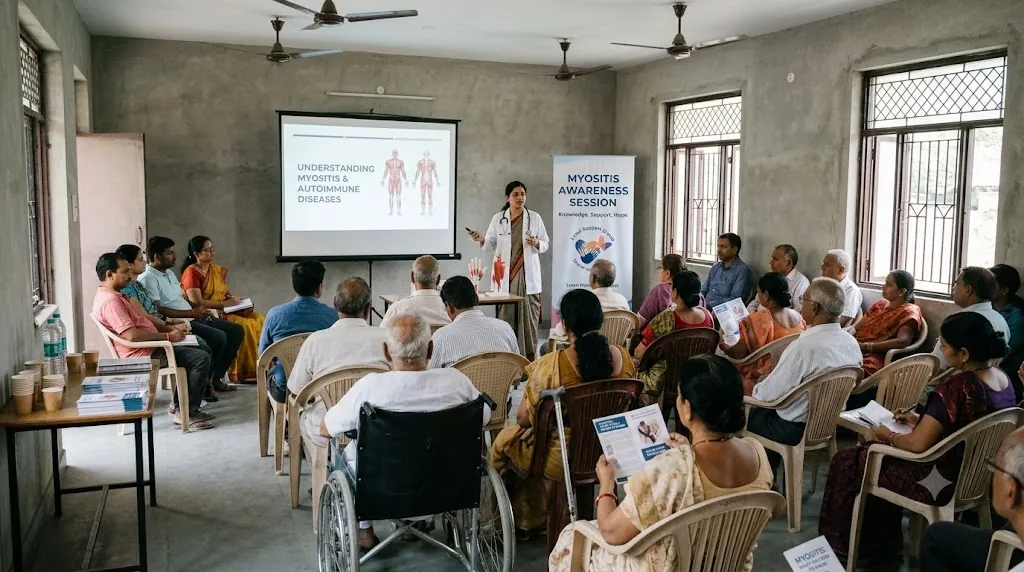
Myositis India provides educational resources about the disease, its different types, diagnosis, treatment and management. Such material can help patients prepare questions for medical appointments and better understand discussions with their healthcare team.
Educational information should support, rather than replace, individual medical advice.
2. Connecting Patients With Specialists
Myositis may require input from different medical specialties depending on its presentation. A patient might need a rheumatologist or neurologist, with other specialists involved when the skin, lungs or swallowing muscles are affected.
Myositis India provides information about healthcare professionals, specialist networks and support resources. These can help patients explore possible routes to appropriate care, although the suitability and availability of a specialist must be confirmed directly.
3. Supporting Patients and Caregivers
Long-term illness can affect family routines, emotional wellbeing and the ability to manage everyday tasks.
Myositis India offers community and patient-support resources, including patient stories and information about support services. These can provide opportunities for patients and caregivers to learn from shared experiences and access information about the condition.
Peer support does not replace professional psychological or medical care when it is needed, but it can help reduce the sense of navigating a rare condition alone.
4. Promoting Research and Awareness
Research is important for improving understanding of rare diseases and identifying better approaches to diagnosis and treatment. The National Policy for Rare Diseases, 2021 also highlights the importance of research and improved access to appropriate care.
Myositis India promotes research awareness and provides information about clinical trials. This can help patients learn about research developments and possible opportunities to discuss with their doctors. Participation in a trial always depends on the study's criteria and the clinical team's assessment.
How a Healthcare NGO Complements Medical Care
A healthcare NGO does not replace hospitals, clinicians or public health programmes. Its contribution lies in the areas of education, community support, advocacy and connections to credible resources.
For rare diseases, these functions can be especially useful because patients may need sustained support after the initial consultation. Better communication between patients, healthcare professionals, researchers and advocacy groups can also help make patient needs more visible.
Myositis India’s Role in Rare Disease Care
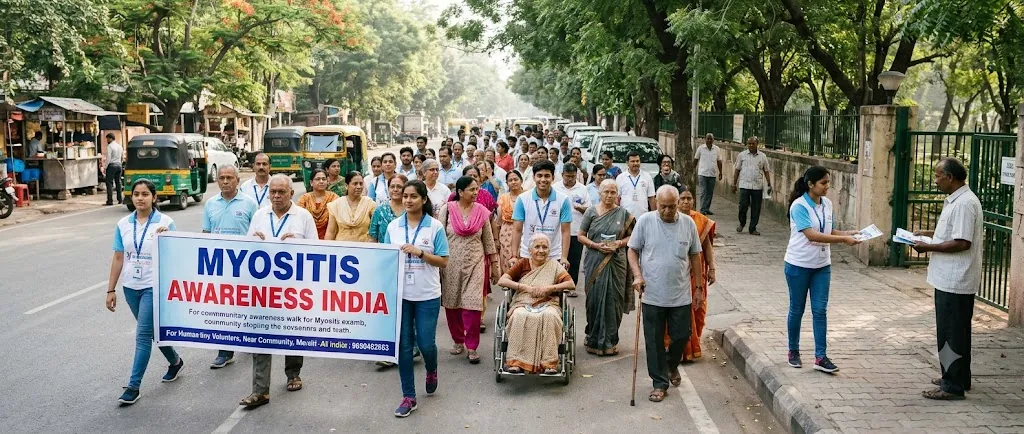
Myositis India works to make the journey of people affected by myositis in India better informed and less isolating. Through awareness initiatives, educational resources, patient and caregiver support, specialist connectivity and research information, it addresses several needs that arise alongside medical treatment.
Its role as a myositis NGO in India is to support and advocate for the community, not to diagnose or treat patients directly. By helping people find credible information and explore appropriate healthcare connections, Myositis India contributes to the wider effort to improve rare disease awareness and patient support.
FAQs
Q. What is the role of a healthcare NGO in India?
A healthcare NGO may provide education, community support, awareness programmes, patient advocacy and links to relevant services. Its specific role depends on its mission and resources.
Q. Does Myositis India treat patients directly?
No. Myositis India describes itself as a non-profit patient advocacy organisation rather than a hospital or clinic. It provides information, support and connections to healthcare professionals.
Q. Why is rare disease awareness important?
Awareness can help patients and families recognise when symptoms need medical evaluation, find reliable information and understand available support. It can also encourage research and more informed healthcare discussions.
Q. How can patients and caregivers connect with Myositis India?
They can visit the official website at myositisindia.org to explore educational resources, patient stories, support options, specialist information and clinical-trial resources.