What Causes Myositis? Triggers, Risk Factors and Myths
Discover what may trigger myositis, who may be at higher risk, and which common beliefs about this muscle condition are myths.

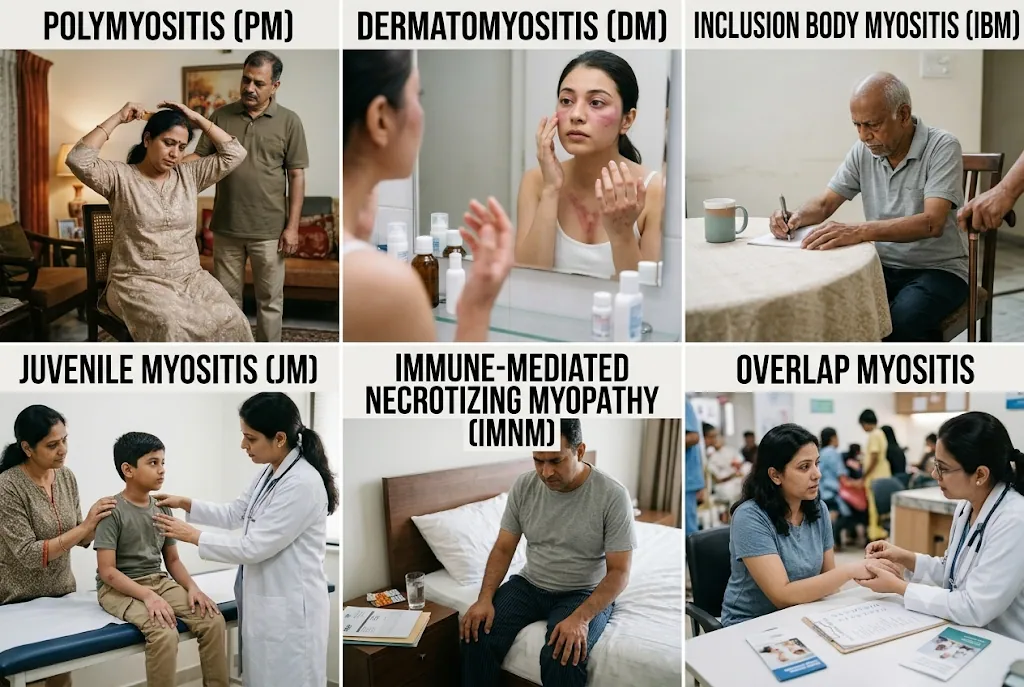
Myositis is a broad term for conditions involving inflammation of skeletal muscle. Several important forms belong to a group of rare autoimmune diseases known as idiopathic inflammatory myopathies.
For someone newly diagnosed, one of the first questions is often: what causes myositis? In most autoimmune forms, there is no single identifiable cause. Research suggests that myositis develops through a combination of genetic susceptibility, abnormal immune activity and, in some patients, environmental or medication-related triggers. Exactly why one person develops the disease while another does not is still being studied.
Understanding this distinction is important because myositis is usually not the result of something a person did wrong, ate or failed to do.
What Does Autoimmune Disease Mean?
An autoimmune disease develops when the immune system mistakenly targets the body's own tissues.
In autoimmune inflammatory myopathies, different parts of the immune system contribute to muscle damage and, depending on the subtype, may also affect the skin, lungs, joints or other organs. The underlying biological processes are not identical in every type of myositis.
This is why dermatomyositis, antisynthetase syndrome, immune-mediated necrotising myopathy and other inflammatory myopathies can have different symptoms, autoantibodies and treatment responses.
Is There One Cause of Myositis?
Usually, no.
The cause of idiopathic inflammatory myopathies is considered multifactorial. Researchers believe that disease may develop when a person with an underlying susceptibility encounters one or more factors that contribute to abnormal immune activation.
Potential influences being studied include:
- Genetic susceptibility
- Certain infections
- Some medicines
- Smoking and inhaled environmental exposures
- Ultraviolet radiation in particular disease subtypes
- Other environmental factors
However, an association does not mean that any one of these factors directly causes myositis in every patient. Recent reviews emphasise that evidence varies substantially between exposures and myositis subtypes.
Does Genetics Play a Role?
Genetics appears to influence susceptibility to several autoimmune inflammatory myopathies.
Certain immune-related genetic variants are more common in particular myositis groups, suggesting that inherited biology can affect how the immune system responds to environmental exposures.
However, most autoimmune myositis is not inherited in a simple way from parent to child. Having a genetic susceptibility does not mean that someone will inevitably develop the disease.
Genetics is better understood as one part of a larger interaction between the immune system and the environment.
Can an Infection Trigger Myositis?
Infections are being studied as possible environmental triggers for autoimmune inflammatory myopathies.
Researchers have investigated associations with several viral infections, and recent evidence suggests that infection may contribute to immune activation in susceptible individuals. However, establishing that an infection directly caused an individual patient's autoimmune myositis is usually difficult.
There is also an important distinction between autoimmune myositis and muscle inflammation caused directly by an infection. Infectious myositis is a different clinical problem and requires different treatment.
Can Medicines Cause Myositis?
Certain medicines can be associated with muscle injury or, much more rarely, immune-mediated myositis.
One important example involves statins, medicines commonly prescribed to lower cholesterol. Most people taking statins do not develop autoimmune myositis, and most muscle symptoms reported while taking a statin are not caused by immune-mediated inflammatory myopathy.
A rare condition called anti-HMGCR immune-mediated necrotising myopathy can occur in association with statin exposure. It causes significant muscle weakness and usually markedly elevated muscle enzymes. It can also occur in people who have never taken statins.
Other medicines, including some immune checkpoint inhibitors used in cancer treatment, can also trigger distinct inflammatory muscle syndromes in a small number of patients.
Patients should not stop prescribed medicines simply because they develop muscle symptoms. New or progressive weakness should instead be discussed with the prescribing doctor so that the cause can be investigated appropriately.
Do Smoking or Environmental Exposures Increase Risk?
Researchers have identified associations between some environmental exposures and particular myositis phenotypes.
Smoking has been associated with certain antibody-defined inflammatory myopathies, while occupational exposure to substances such as silica has also been studied. Ultraviolet radiation may influence dermatomyositis risk or phenotype in some populations.
These relationships are complex. They do not mean that smoking, sunlight or a particular exposure will inevitably cause myositis.
Environmental factors appear to interact with a person's genetic and immune background rather than acting as simple standalone causes.
Does Sunlight Cause Dermatomyositis?
Ultraviolet exposure has been associated with dermatomyositis and with particular autoantibody patterns in epidemiological research.
However, it would be inaccurate to say that sunlight by itself causes dermatomyositis.
Once someone has dermatomyositis, ultraviolet exposure can also aggravate photosensitive skin disease, which is a separate issue from what originally caused the illness.
Patients with dermatomyositis may therefore be advised to use appropriate sun protection as part of their skin management.
Can Stress Cause Myositis?
There is no evidence that a single stressful event alone explains why someone develops autoimmune myositis.
Stress can influence sleep, fatigue, pain and overall wellbeing, and researchers continue to study links between stress and immune regulation. But autoimmune disease develops through much more complicated interactions between genetic, immune and environmental factors.
It is therefore inaccurate to tell someone that their myositis simply occurred because they were “too stressed.”
Does Diet Cause Myositis?
There is no established food or diet that has been shown to cause idiopathic inflammatory myopathy.
Diet is important for overall health and may become especially relevant when managing weight, bone health, cardiovascular risk or the effects of medicines such as corticosteroids. But eating a particular food does not explain why most patients develop autoimmune myositis.
Similarly, there is currently no scientifically established “myositis diet” that can replace medical treatment.
Can Exercise Cause Myositis?
Ordinary physical activity or appropriately planned exercise does not cause autoimmune myositis.
Intense or unfamiliar exercise can temporarily produce muscle soreness and increase creatine kinase levels, which can sometimes complicate interpretation of blood tests. Muscle injury from strenuous exercise is different from autoimmune inflammatory myopathy.
For people already diagnosed with myositis, appropriately planned exercise and rehabilitation are generally important parts of management, adjusted to disease activity and individual ability.
Is Cancer a Cause of Myositis?
Certain adult inflammatory myopathies, particularly dermatomyositis and some autoantibody-defined groups, are associated with an increased risk of malignancy around the time of myositis onset.
This relationship is complex. It does not mean that every person with dermatomyositis has cancer or that cancer is the simple cause of every case.
Doctors may recommend risk-based cancer screening according to factors such as age, myositis subtype, autoantibody profile and clinical features.
What Else Can Cause Muscle Weakness?
Not every person with muscle weakness has myositis.
Other muscle weakness reasons include:
- Neurological disorders
- Thyroid disease
- Electrolyte disturbances
- Nutritional deficiencies
- Medication effects
- Inherited muscle disorders
- Infections
- Other muscle diseases
Anaemia can also cause fatigue and reduced exercise tolerance that may feel like weakness, although this is different from an actual reduction in muscle strength.
The pattern of weakness, how quickly it develops and the presence of other symptoms help doctors determine which causes need to be investigated.
How Do Doctors Work Out Whether Myositis Is the Cause?
There is no single test that determines both whether someone has myositis and exactly what caused it.
Doctors may consider:
- The pattern and progression of muscle weakness
- Creatine kinase and other blood tests
- Myositis-specific and myositis-associated autoantibodies
- MRI
- Electromyography (EMG)
- Muscle or skin biopsy in selected cases
- Medication and exposure history
- Lung, swallowing or other organ assessments when relevant
Diagnosis depends on combining the clinical picture with appropriate investigations. Different inflammatory myopathies have distinct mechanisms and treatment pathways.
Common Myths About What Causes Myositis
Myth: Myositis happens because someone did not exercise enough.
Lack of exercise can affect fitness, but it does not explain autoimmune inflammatory myopathy.
Myth: Stress alone causes myositis.
Stress may affect symptoms and wellbeing, but autoimmune myositis is a complex disease and cannot generally be traced to one stressful event.
Myth: A poor diet causes myositis.
No particular food or diet has been established as the cause of idiopathic inflammatory myopathy.
Myth: Myositis is contagious.
Autoimmune myositis cannot be passed from one person to another through ordinary contact.
Myth: If someone taking a statin develops muscle pain, they have myositis.
Most statin-associated muscle symptoms are not autoimmune myositis. Persistent weakness or significant muscle abnormalities require proper medical assessment.
How Myositis India Supports Patients
Uncertainty about why a rare disease developed can make a diagnosis more difficult to understand. Reliable information can help patients distinguish established medical evidence from unsupported explanations and misinformation.
Myositis India, a unit of the Madalasa Foundation, supports people affected by myositis through awareness, educational resources, patient and caregiver support, an expert network and research-related information.
Myositis India does not replace medical diagnosis or treatment. Its role is to help patients and families access credible information, support and appropriate healthcare connections.
Frequently Asked Questions
1. What causes myositis?
There is usually no single cause of autoimmune myositis. Current evidence suggests that genetic susceptibility, abnormal immune activity and environmental factors may interact in the development of disease.
2. Can a virus cause myositis?
Some infections can directly cause muscle inflammation, while infections have also been investigated as possible triggers for autoimmune inflammatory myopathies in susceptible people. These are not necessarily the same process.
3. Can statins cause myositis?
Statins can cause several types of muscle symptoms, but autoimmune myositis is rare. Anti-HMGCR immune-mediated necrotising myopathy is an uncommon autoimmune muscle disease that may be associated with statin exposure. Patients should not stop prescribed statins without discussing symptoms with their doctor.
4. Is myositis hereditary?
Most autoimmune inflammatory myopathies are not inherited directly in a simple parent-to-child pattern. Genetic factors can influence susceptibility, but other immune and environmental factors are also involved.
5. Can stress or diet cause myositis?
Neither stress nor a particular diet has been established as a single cause of autoimmune myositis. Both may influence general health or symptoms, but the development of inflammatory myopathy is considerably more complex.