Is Myositis Curable? What Remission and Long-Term Control Mean
Explore whether myositis can be cured, how remission differs from recovery, and what treatment and monitoring may mean for long-term disease control.
A diagnosis of myositis often leads to one immediate question: is myositis curable?
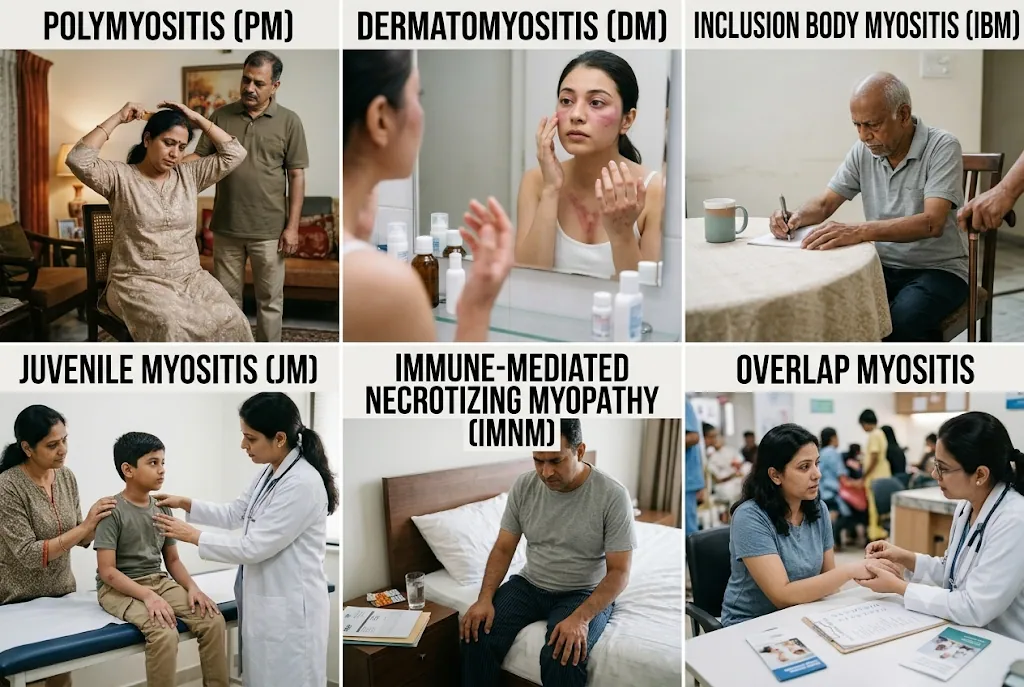
There is no single answer that applies to every form of myositis. Some autoimmune inflammatory myopathies can respond very well to treatment and enter prolonged periods of remission. Others may remain active or relapse over time and require long-term treatment. Inclusion body myositis follows a different course and generally progresses gradually despite conventional immunosuppressive treatment.
For patients, it is therefore often more useful to think about disease control, remission, function and long-term management rather than a single definition of cure.
What Does “Remission” Mean in Myositis?
Remission generally means that there is little or no evidence of active disease.
In inflammatory myopathies, doctors may look at several factors when assessing disease activity, including muscle strength, skin or other organ involvement, symptoms and laboratory findings.
Some patients may achieve good disease control while continuing treatment. Others may eventually reach sustained remission and no longer require myositis medication.
Historically, clinical research definitions have distinguished between a complete clinical response while still receiving treatment and remission maintained without myositis therapy. The exact terminology used in routine practice may vary.
Remission does not necessarily mean that the disease can never become active again.
Can Myositis Come Back After Remission?
Yes.
Some inflammatory myopathies follow a relapsing and remitting course, meaning periods of low or absent disease activity can be followed by a flare.
Other patients may have a monophasic course, where disease becomes controlled and does not return after treatment is eventually stopped. Some have chronic disease that requires ongoing medication.
The course varies substantially between patients and between different myositis subtypes.
This is why regular follow-up can remain important even when someone is feeling well.
Can Dermatomyositis Go Into Remission?
Yes. Dermatomyositis can enter remission in some patients.
Treatment usually aims to control active muscle, skin and any other organ involvement while reducing the risk of long-term damage. Corticosteroids and steroid-sparing immunosuppressive medicines are commonly used, with treatments such as intravenous immunoglobulin or other therapies considered depending on severity and response.
Some patients eventually achieve sustained disease control with reduced treatment, and a smaller proportion can remain well without medication.
However, other patients experience relapses or require long-term therapy.
The course also depends on the dermatomyositis subtype and whether organs such as the lungs are involved.
What About Immune-Mediated Necrotising Myopathy?
Immune-mediated necrotising myopathy, or IMNM, is another autoimmune inflammatory muscle disease.
It can cause substantial muscle weakness and markedly raised muscle enzymes. Some patients respond well to immunotherapy, while others require prolonged treatment to control disease activity.
Recovery can also take time. If severe muscle damage has already resulted in muscle atrophy or fatty replacement, controlling the immune disease may not completely restore lost muscle function.
This is one reason why remission and complete recovery are not always the same thing.
Is Inclusion Body Myositis Curable?
Inclusion body myositis, or IBM, is an important exception when discussing remission.
IBM usually progresses slowly over years and generally does not respond meaningfully to the conventional immunosuppressive treatments used for several other inflammatory myopathies.
There is currently no established treatment that reliably stops or reverses the progression of IBM.
Management therefore focuses heavily on maintaining mobility and independence, reducing falls, addressing swallowing difficulties, using appropriate assistive devices and supporting overall function.
IBM should not be grouped together with treatable autoimmune inflammatory myopathies when discussing remission or cure.
Does Good Treatment Mean Symptoms Will Completely Disappear?
Not always.
Successful myositis treatment has several possible goals:
- Reduce active inflammation or abnormal immune activity
- Improve or stabilise muscle strength
- Control skin, lung or other organ involvement
- Reduce the frequency of flares
- Lower the need for corticosteroids
- Preserve mobility and independence
- Improve quality of life
A patient can have very good disease control without every symptom disappearing completely.
For example, previous inflammation may have caused permanent muscle damage, or a patient may continue to experience fatigue or reduced endurance even when the autoimmune disease itself is well controlled.
What Does Long-Term Myositis Treatment Involve?
Treatment depends on the myositis subtype, disease severity and organs involved.
For several autoimmune inflammatory myopathies, treatment may include corticosteroids together with medicines such as methotrexate, azathioprine, mycophenolate or other immunomodulatory treatments.
Intravenous immunoglobulin and biologic or other therapies may be considered in selected patients.
Current treatment guidance also emphasises the importance of appropriately planned exercise, physiotherapy and occupational therapy as part of long-term care.
The aim is not simply to improve a blood test result. Treatment should also protect function and manage disease affecting the skin, lungs, swallowing or other organs.
Why Are Steroid-Sparing Medicines Used?
Corticosteroids can be very effective at controlling active inflammatory myositis, but prolonged use can cause significant side effects.
Doctors therefore often introduce other immune-modulating medicines so that corticosteroid doses can gradually be reduced while maintaining disease control.
Treatment guidelines specifically recommend disease-modifying medicines to help control muscle inflammation, maintain remission and reduce steroid exposure.
Patients should not reduce or stop corticosteroids or other myositis medicines without guidance from their treating doctor.
Can Exercise Help People Living With Myositis?
Yes, when appropriately planned.
Older advice sometimes encouraged people with active inflammatory muscle disease to avoid exercise. Current evidence supports safe, individualised exercise and rehabilitation as part of myositis management.
Specialist physiotherapy can help maintain or improve strength, mobility and physical function, while occupational therapy can help patients adapt everyday activities and conserve energy where needed.
The intensity and type of exercise should be adapted to disease activity, existing muscle damage and the patient's physical condition.
What Factors Affect Long-Term Outlook?
The long-term course of myositis varies considerably.
Factors that may influence outcomes include:
- The specific myositis subtype
- Severity of muscle involvement
- Lung or swallowing involvement
- Response to treatment
- Previous permanent muscle damage
- Other medical conditions
- Frequency of relapses
- Ability to maintain mobility and rehabilitation
Certain antibody-defined and clinical subtypes can also behave differently, which is one reason modern myositis care increasingly focuses on identifying the specific disease phenotype rather than treating all inflammatory myopathies as the same condition.
What Does Living With Myositis in India Involve?
Living with myositis in India may involve long-term medical follow-up, access to appropriate specialists, regular investigations, rehabilitation and navigating the cost and availability of treatment.
Depending on the subtype, patients may need care from rheumatologists, neurologists, dermatologists, pulmonologists, physiotherapists or swallowing specialists.
For many patients, long-term management also means learning to recognise changes in strength, new symptoms or possible flares without allowing every period of fatigue or muscle discomfort to become a source of alarm.
Having a clear treatment plan and knowing when to contact the medical team can make long-term disease management more structured.
How Myositis India Supports Patients
Living with a chronic or relapsing disease involves more than medical appointments.
Myositis India, a unit of the Madalasa Foundation, supports people affected by myositis through educational resources, patient and caregiver support, a patient helpline, specialist connectivity and information about ongoing research and clinical trials.
Its role is to complement medical care by helping patients and families find credible information and community support.
Myositis India is not a hospital or clinic, and treatment decisions should remain with qualified healthcare professionals.
Frequently Asked Questions
1. Is myositis curable?
There is no universal cure for every form of myositis. Some autoimmune inflammatory myopathies can enter prolonged remission, while others require ongoing treatment or experience relapses. Inclusion body myositis generally follows a slowly progressive course.
2. Can someone with myositis live a normal life?
Many people with well-controlled inflammatory myositis are able to maintain work, relationships, exercise and everyday activities. The degree of limitation varies depending on the subtype, disease severity, organ involvement and any permanent muscle damage.
3. Can myositis go into remission without medication?
Some patients with treatable autoimmune inflammatory myopathies eventually achieve sustained remission and can remain well after treatment has been withdrawn. This does not occur in every patient, and medication should only be reduced or stopped under medical supervision.
4. Does remission mean myositis will never return?
No. Some patients remain in long-term remission, while others experience a relapse after months or years of low disease activity. Continued follow-up may therefore remain important.
5. Is inclusion body myositis different from other forms?
Yes. IBM usually progresses slowly and does not generally respond to conventional immunosuppressive treatment. Management focuses on maintaining function, mobility, swallowing safety and independence.
6. Can physiotherapy help with myositis?
Yes. Appropriate exercise and physiotherapy are recommended as part of management for many people with inflammatory myopathy and can help improve or maintain physical function and quality of life.