Understanding Myositis: A Comprehensive Guide to Inflammatory Myopathy and Its Impact on Patients in India
Discover the intricacies of myositis in our detailed guide. Learn about its types, symptoms, and effects on patients in India, and enhance your understanding.
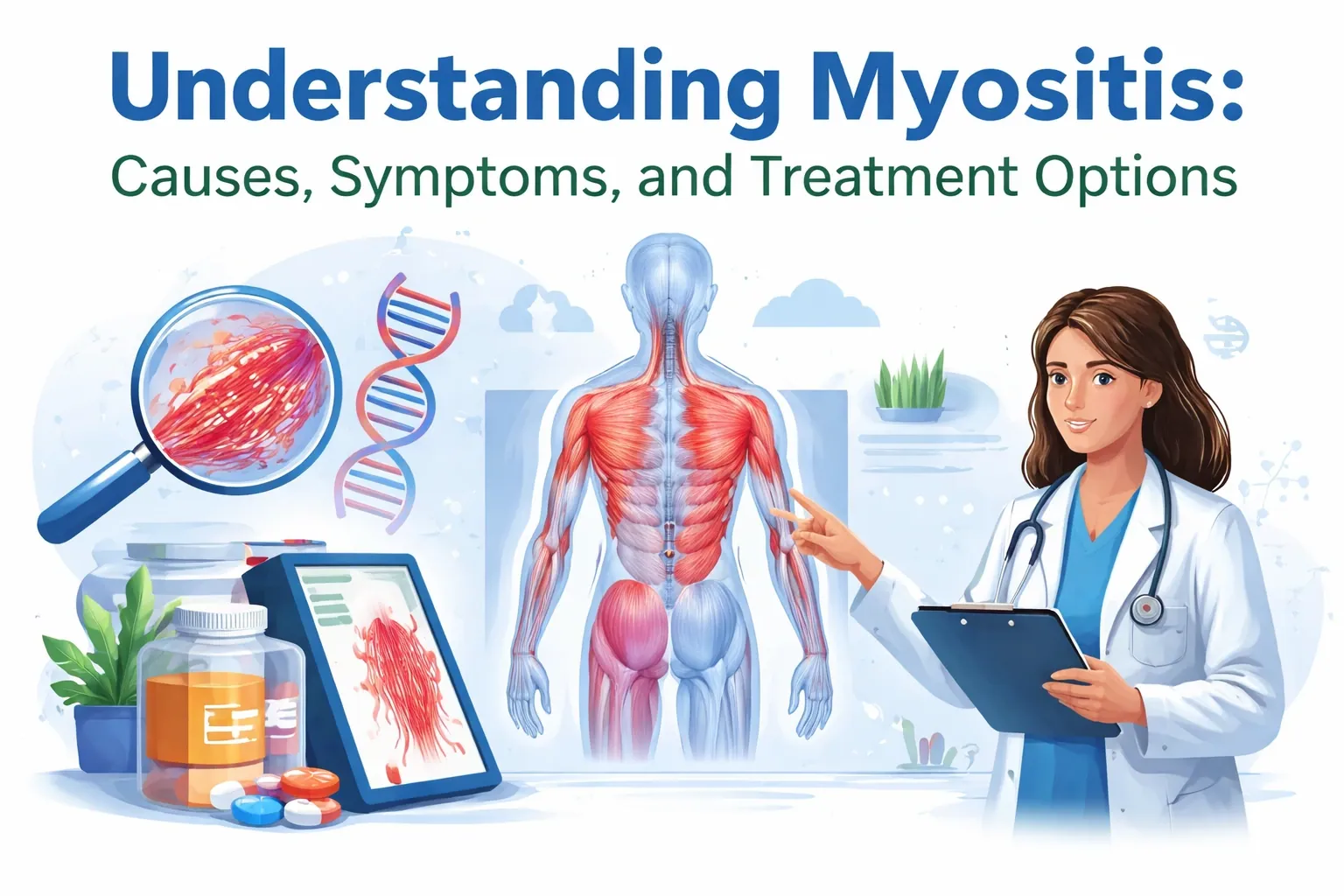
Myositis is often used as an umbrella term for conditions that cause inflammation or injury in the muscles. In this guide, we focus on idiopathic inflammatory myopathies, a group of rare immune-mediated disorders that commonly affect skeletal muscles and may also involve the skin, lungs, joints, heart, or gastrointestinal system. These conditions can cause progressive weakness, fatigue, and functional difficulty, but the pattern varies widely across subtypes.
What Is Myositis?
The term myositis comes from “myo,” meaning muscle, and “-itis,” meaning inflammation. Medically, it refers to conditions in which the immune system may attack skeletal muscle fibres, causing damage, weakness, and functional impairment.
Inflammatory myopathies are autoimmune in nature, meaning the body’s defence system targets its own tissues instead of foreign invaders. While the precise triggers remain unclear, genetic susceptibility and environmental factors (such as infections or toxins) may contribute.
Main Types of Inflammatory Myopathy
Below are the most recognised forms of myositis:
Polymyositis (PM) – A less common diagnosis today, marked by symmetric proximal muscle weakness after other subtypes are excluded.
Dermatomyositis (DM) – Similar to PM, but also features distinctive skin rashes.
Inclusion Body Myositis (IBM) – A slowly progressive form more common in older adults, affecting both proximal and distal muscles.
Immune-Mediated Necrotising Myopathy (IMNM) – Marked by muscle cell death with relatively limited inflammation.
Juvenile Myositis – Occurs in children, typically with muscle weakness and characteristic rash patterns.
Each subtype has unique features, but most involve immune-mediated muscle damage or dysfunction.
Recognising the Symptoms
Myositis often begins insidiously, which is why early detection can be challenging. The symptoms may overlap with many common conditions, so understanding the pattern is vital for appropriate intervention.
Muscle-Related Symptoms
-
Progressive muscle weakness, especially in muscles close to the torso (e.g., hips, shoulders).
-
Difficulty with daily tasks such as getting up from a chair, climbing stairs, lifting objects or combing hair.
-
Fatigue disproportionate to activity level.
-
Occasional muscle pain and swelling.
Systemic and Extra-Muscular Signs
-
Rashes such as heliotrope rash around the eyelids or Gottron’s papules on knuckles (seen in dermatomyositis).
-
Shortness of breath or a persistent cough from lung involvement.
-
Difficulty swallowing and other gastrointestinal involvement.
-
Joint pain or arthritis-like symptoms.
-
Unexplained fever, weight loss or general malaise.
Patients with IBM may notice subtle but progressive weakness in finger grip or feet before more proximal muscles are affected.
The Diagnostic Process
Diagnosing myositis is rarely straightforward, partly because it is rare and many clinicians may not encounter it routinely. It typically involves a combination of clinical examination, laboratory testing, imaging, and sometimes tissue studies.
i. Initial Clinical Evaluation
A careful medical history and physical examination are the first steps. The doctor will assess patterns of weakness, daily functional limitations, and any skin or respiratory symptoms.
ii. Key Diagnostic Tests
-
Blood tests – Elevated muscle enzymes like creatine kinase (CK) often suggest muscle injury.
-
Autoantibody panels – Help identify subtype-specific markers.
-
Electromyography (EMG) – Measures electrical activity in muscles to distinguish myopathy from nerve disorders.
-
Muscle MRI – Helps detect muscle inflammation, assess disease activity, and identify suitable biopsy sites.
-
Muscle biopsy – May help confirm the diagnosis, classify the subtype, or rule out other causes, but is not required in every case.
A combination of these findings, not a single test result, generally leads to a confirmed myositis diagnosis.
Treatment Options and Myositis Management
There is no cure for most forms of inflammatory myopathy, but early and individualised treatment can significantly improve strength, reduce inflammation, and enhance quality of life.
Medical Therapies
-
Corticosteroids – Often first-line to reduce inflammation.
-
Immunosuppressants – Used to control immune activity when steroids alone are insufficient.
-
Biologic agents – In selected cases for refractory disease.
-
Intravenous immunoglobulin (IVIG) – Used in certain cases, particularly when other treatments are inadequate or not tolerated.
-
Physical therapy – Maintains muscle function and prevents contractures.
Choosing the right regimen often requires specialists such as rheumatologists, neurologists, and dermatologists working together to coordinate care.
Challenges Specific to Patients in India
While myositis remains rare worldwide, patients in India may face additional hurdles:
-
Delayed recognition due to limited awareness of rare autoimmune diseases.
-
Access to specialised testing and rheumatology services concentrated in urban centres.
-
Cost barriers for advanced diagnostics like MRI or autoantibody panels.
-
Cultural tendencies to normalise fatigue or attribute symptoms to ageing.
These challenges emphasise the need for better education both within the medical community and the public.
The Role of Myositis India in Patient Support
Amid these challenges, Myositis India plays a critical role in bridging gaps in awareness and care. The organisation focuses on:
-
Educating patients and families about symptoms, diagnostics, and treatments.
-
Connecting individuals with specialist physicians and support networks.
-
Sharing resources and guidance in accessible language for Indian patients.
-
Advocating for research and greater understanding of rare autoimmune conditions.
-
Creating a community where lived experiences are valued and shared.
For patients navigating the uncertainty of diagnosis and chronic management, this community provides not just information but reassurance and solidarity.
Living with Myositis: Beyond Diagnosis
A holistic approach to myositis includes physical care and emotional well-being. Patients benefit from:
-
Regular exercise tailored by a physiotherapist
-
Balanced nutrition to support muscle health
-
Psychological support or counselling
-
Participation in support groups
With early recognition, appropriate treatment, and supportive care, many people with inflammatory myopathies can maintain meaningful activity and quality of life.
FAQs
Q1. Are autoimmune conditions like myositis common in India?
Myositis is considered a rare autoimmune condition, but awareness and diagnosis are steadily increasing in India. As access to specialists, advanced testing, and patient education improves, more cases are being correctly identified. Earlier, many patients were either misdiagnosed or remained undiagnosed because symptoms were mistaken for fatigue, ageing, or general weakness.
Q2. Is myositis hereditary?
Myositis is not usually passed directly from parents to children. However, certain genetic factors may make some individuals more susceptible to developing autoimmune diseases in general. Environmental triggers such as infections, medications, or toxins may interact with this genetic predisposition to initiate the condition.
Q3. Can myositis affect organs other than muscles?
Yes. Although muscle weakness is the hallmark feature, several types of myositis can involve other organs. The skin is commonly affected in dermatomyositis, while lungs may be involved in anti-synthetase syndrome. Some patients may experience swallowing difficulties, joint pain, or even heart involvement, depending on the subtype.
Q4. Should I restart normal activities after diagnosis?
Returning to daily activities is encouraged, but it should be gradual and guided by medical advice. Overexertion can worsen fatigue and muscle weakness. Physiotherapists often design personalised exercise routines that help patients regain strength safely while respecting their body’s limits.
Q5. Is remission possible?
Yes, many patients achieve remission or stable disease control with early diagnosis and appropriate treatment. While a permanent cure may not be available, timely intervention, consistent follow-up, and lifestyle adjustments can allow individuals to lead active and fulfilling lives.