The Role of Early Diagnosis in Managing Myositis: Key Symptoms to Watch For
Early diagnosis is crucial in myositis management. Explore key symptoms to identify and enhance your understanding of this condition.
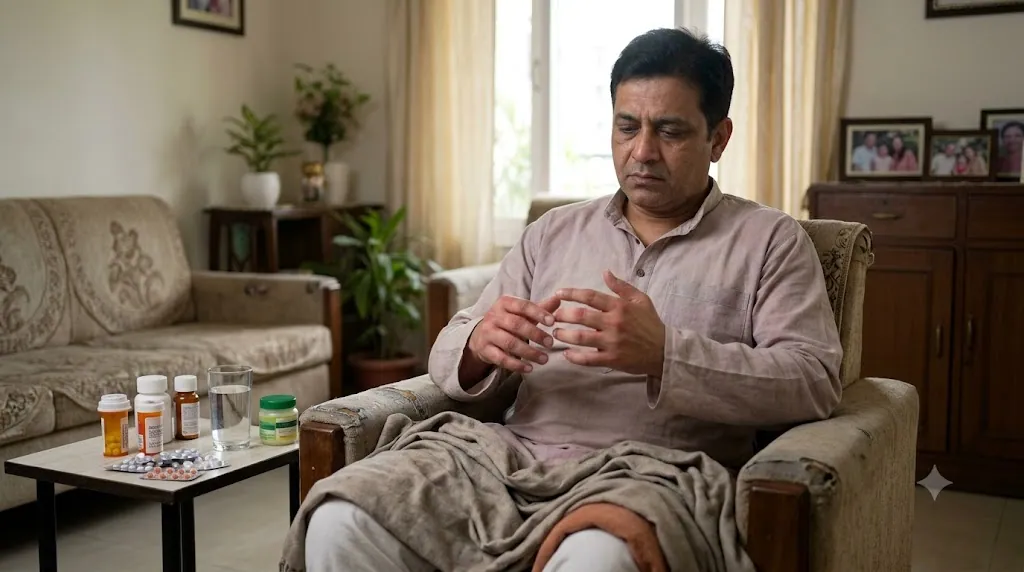
What if the tiredness you dismiss, the stairs you now avoid, or the quiet struggle to lift your arms are not signs of ageing or overwork, but clues of something deeper within the body? Myositis often begins in these subtle, easily overlooked ways, asking for attention long before it demands urgency. Recognising these early symptoms can change the entire course of the illness, turning delay into diagnosis and uncertainty into timely care.
What is Myositis disease?
It is a group of rare autoimmune conditions where the body’s immune system mistakenly attacks its own muscles, leading to inflammation, weakness, and, in some cases, involvement of the skin, lungs, or swallowing muscles. Known medically as inflammatory myopathy, myositis is not a single illness but a spectrum that includes Dermatomyositis, Polymyositis, Anti-synthetase syndrome, and Inclusion body myositis.
For patients across India, the greatest challenge is not always treatment. It is recognition. The earliest signs of myositis often resemble fatigue, vitamin deficiency, ageing, post-viral weakness, or stress. As a result, many people move from one clinic to another before the correct myositis diagnosis is made. Yet evidence shows that starting myositis treatment within weeks of symptom onset can significantly improve muscle recovery and long-term function. Early diagnosis is not merely helpful. It is decisive.
Why Myositis Is Commonly Missed in Early Stages
In the Indian context, patients usually first visit a family physician with vague complaints: tiredness, muscle pain, difficulty climbing stairs, or trouble lifting objects. These symptoms overlap with common conditions such as anaemia, thyroid imbalance, viral fever, arthritis, or nutritional deficiency. Because myositis is rare among autoimmune diseases in India, suspicion is often low in the early phase.
Referral to a rheumatologist, neurologist, or dermatologist typically happens only after symptoms persist or worsen. By this time, muscle inflammation may already have caused significant damage.
The Earliest Myositis Symptoms Patients Should Not Ignore
The most important early feature is proximal muscle weakness. This affects muscles close to the trunk:
- Difficulty getting up from a chair or the floor
- Trouble climbing stairs
- Inability to lift arms to comb hair or reach shelves
- Neck weakness, making it hard to lift the head from a pillow
- Fatigue out of proportion to activity
In most forms of myositis, hands and feet are affected later. However, in Inclusion body myositis, weakness of grip, fingers, or knees may appear first.
Certain visible signs can make diagnosis easier when recognised early. In Dermatomyositis, distinctive rashes often appear before or alongside muscle weakness:
- Gottron’s papules on the knuckles
- A violet discolouration on the eyelids known as heliotrope rash
- A rash across the upper chest called the V-sign
- A rash across the shoulders and upper back called the shawl sign
Other symptoms that should raise suspicion include:
- Difficulty swallowing food or frequent choking
- Shortness of breath or persistent dry cough, seen in Anti-synthetase syndrome
- Joint pain, low-grade fever, and unexplained weight loss
When these signs appear together, early specialist consultation becomes crucial for accurate myositis diagnosis.
How Doctors Confirm a Myositis Diagnosis
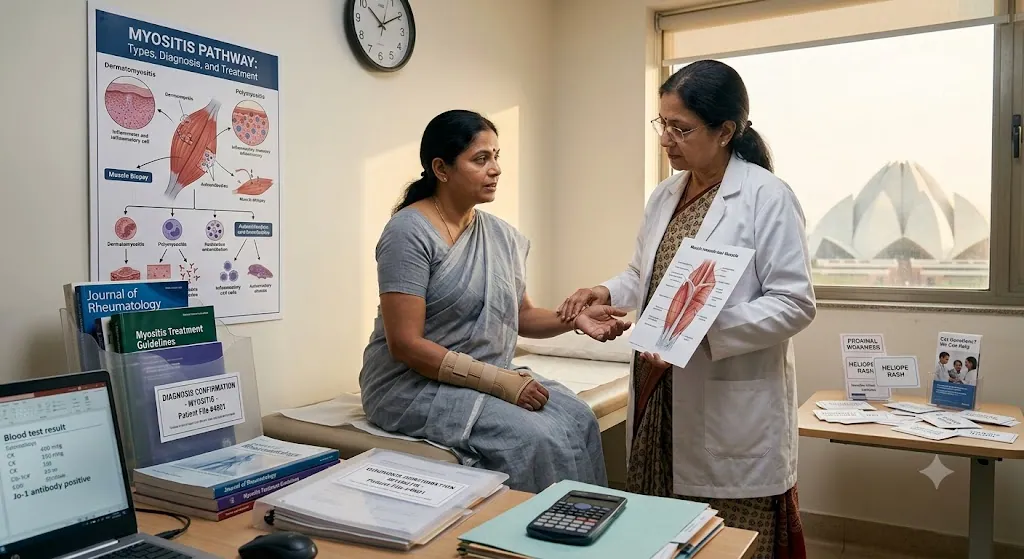
No single test confirms myositis. Diagnosis relies on several converging findings from clinical examination, blood tests, imaging, and sometimes biopsy.
1. Muscle Enzyme Tests
The most commonly measured enzyme is Creatine Kinase (CK or CPK). Normal levels are usually below 200 U/L. In myositis, levels often rise above 1000 U/L, indicating muscle damage. However, some patients, especially with dermatomyositis, may have only mild elevation. A normal CK does not rule out myositis.
2. Myositis Autoantibodies
Around 15 to 17 specific antibodies are associated with myositis. These are present in roughly two-thirds of patients. While not essential for diagnosis, they help predict disease type, organ involvement, and response to treatment.
3. MRI of Muscles
Muscle MRI is increasingly preferred because it is non-invasive. It shows muscle swelling and inflammation, helps identify which muscles are affected, and guides the biopsy site if needed.
4. Electromyography (EMG)
EMG measures electrical activity in muscles and helps differentiate muscle disorders from nerve disorders. Though useful, it can be uncomfortable and is now often replaced by MRI in many centres.
5. Muscle or Skin Biopsy
A biopsy remains the most definitive test. A small sample from the thigh or shoulder muscle is examined under a microscope to confirm inflammatory changes. In dermatomyositis, a skin biopsy from the rash may also help.
Doctors usually rely on four or five of these elements together rather than any single result to reach a confident diagnosis.
Why Early Diagnosis Changes the Course of Myositis Treatment
When inflammation continues unchecked, muscle fibres are gradually replaced by fat and scar tissue. This damage is often irreversible. Early myositis treatment aims to stop inflammation before this stage.
The first line of treatment is usually corticosteroids such as prednisone, which act quickly to reduce immune activity. To minimise long-term side effects, doctors add steroid-sparing drugs like methotrexate, azathioprine, or mycophenolate early in the course.
In severe cases or when swallowing or lung muscles are involved, advanced therapies such as intravenous immunoglobulin (IVIG) or biologics may be used. Alongside medication, physiotherapy begins early to preserve strength and prevent disability.
The sooner treatment begins, the greater the chance of regaining muscle strength and avoiding complications.
Additional Tests Based on Symptoms
Because myositis can affect more than muscles, additional tests may be required:
- Pulmonary function tests for breathing difficulty
- Swallow studies for dysphagia
- Cardiac evaluation if heart involvement is suspected
- Cancer screening in certain subtypes, especially dermatomyositis
This comprehensive approach ensures that treatment addresses the whole disease, not just muscle weakness.
Living with Myositis: The Importance of Monitoring
Myositis is a long-term condition with periods of flare-ups and remission. Regular follow-up with blood tests, imaging, and strength assessment allows doctors to adjust medications and detect complications early.
Supportive care is equally important. Physiotherapy, occupational therapy, speech therapy for swallowing, pain management, balanced nutrition, and emotional support all contribute to improved quality of life.
Can Myositis Be Prevented?
As an autoimmune disease, myositis cannot be fully prevented. However, certain practices may reduce risk or aid early detection:
- Sun protection, especially in dermatomyositis
- Avoiding smoking
- Maintaining good nutrition and sleep
- Seeking early medical advice when unexplained muscle weakness appears
- Reviewing medications to avoid drug-induced muscle damage
What Early Recognition Means for Patients in India
Awareness remains the strongest tool. When patients, families, and primary doctors recognise myositis symptoms early, referrals happen faster, tests are ordered sooner, and treatment begins before severe damage occurs.
In the landscape of autoimmune diseases in India, myositis is still under-recognised. Yet with better understanding of early signs and improved access to diagnostic tools, outcomes are steadily improving.
Early diagnosis transforms the story of myositis from one of prolonged uncertainty to one of timely intervention, preserved strength, and a better quality of life. Recognising the signs early is not only a medical advantage. It is a turning point in the patient’s journey from confusion to clarity, and from weakness to recovery.