Navigating Myositis Treatment in India: A Patient’s Journey
Explore a patient's journey through myositis treatment in India, highlighting essential resources, support, and expert advice for better health outcomes.
Myositis is a rare group of autoimmune conditions in which the body’s immune system mistakenly attacks its own muscles, leading to inflammation, progressive weakness, and profound fatigue. Though primarily a muscle disease, myositis can also affect the skin, lungs, joints, and other organs, making it a complex and often misunderstood illness. Its symptoms develop gradually and are frequently misread as routine tiredness, ageing, or minor dermatological concerns, which delays timely diagnosis. In India, limited awareness outside specialist practice means many patients move through multiple consultations before reaching the correct medical care. Understanding the nature of myositis is essential not only for early detection but also for appreciating the long and disciplined journey patients undertake towards management and remission.
Understanding the Illness Before the Journey Begins
Myositis is not a word many people recognise until it enters their home uninvited. It belongs to a group of rare autoimmune conditions known medically as idiopathic inflammatory myopathies (IIM), where the body’s immune system mistakenly attacks its own muscles. Over time, this leads to inflammation, weakness, fatigue, and in several cases, striking skin changes. When people ask, “What is Myositis disease?”, the simplest answer is this: it is a disorder where muscles gradually lose strength because the immune system treats them as enemies. But this definition, though medically accurate, does not capture the lived reality of the condition. Myositis rarely arrives dramatically. It creeps in quietly.
Common Myositis Symptoms People Overlook
The early myositis symptoms are often mistaken for routine fatigue, ageing, skin allergy, or vitamin deficiency. This is where diagnosis gets delayed in India and elsewhere. Typical signs include:
- Gradual muscle weakness in arms and legs
- Difficulty climbing stairs or rising from a chair
- Trouble lifting objects or combing hair
- Loss of grip strength
- Persistent fatigue and body pain
- Skin rashes that darken over time
- Redness on sun exposure
- A distinctive butterfly shaped rash across the cheeks and nose
- Swelling and stiffness in muscles
- Elevated CPK levels in blood tests Because these symptoms appear slowly, patients often move from one doctor to another before reaching the right specialist.
Why Myositis Diagnosis in India Is Challenging
In India, awareness about inflammatory myopathies is still limited outside specialist circles. Patients are frequently treated for:
- Skin infections or allergies
- Vitamin deficiencies
- Age related weakness
- Stress or lifestyle fatigue
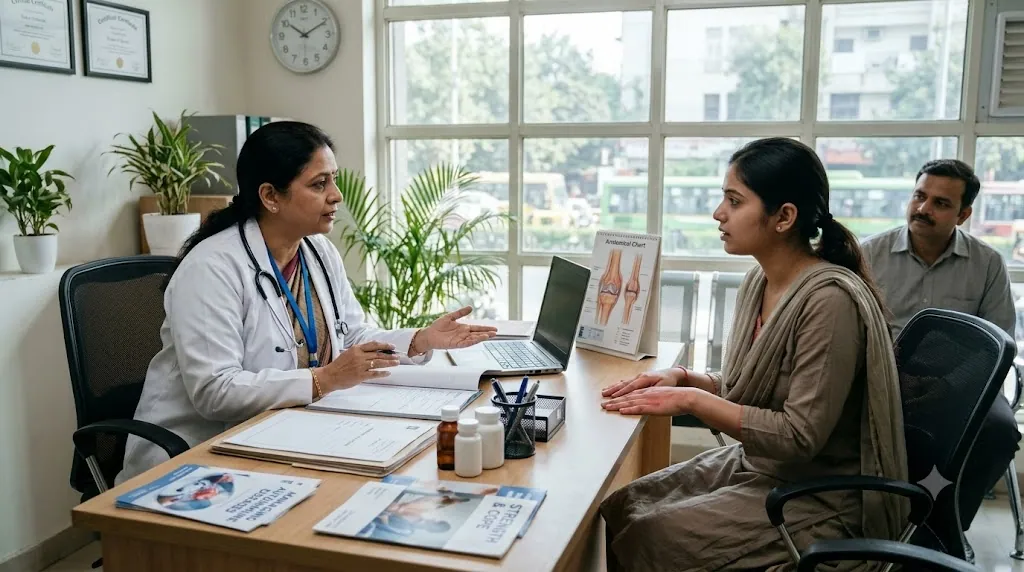
Correct diagnosis typically requires consultation with a rheumatologist or an experienced internal medicine specialist. Tests such as CPK levels, MRI of muscles, EMG, and autoantibody panels help confirm the disease. And this delay in diagnosis is where many patient journeys begin to resemble one another.
Myositis Treatment in India: What Management Looks Like
Once identified, myositis treatment in India follows a structured path:
- Immunosuppressive medicines such as Mycophenolate Mofetil
- Steroids in early phases to control inflammation
- Regular CPK monitoring to assess muscle damage
- Physiotherapy to regain and preserve muscle strength
- Lifestyle regulation with diet, rest, and measured activity
- Continuous follow up to manage flare ups Myositis is not cured. It is managed. Patients aim for remission, where symptoms are controlled but vigilance remains necessary. This clinical understanding becomes far more meaningful when seen through the eyes of someone who has lived it.
A Real Story: Mr. Ajay Shukla’s Journey with Myositis
In May 2019, on an unusually hot night during a power outage, Mr. Ajay Shukla noticed something peculiar. Excessive sweating was followed by red, acne like rashes on his skin. What appeared trivial at first gradually darkened and spread across his chest, neck, and forehead. Dermatological treatment followed. Ointments. Tablets. No relief. Within two to three months, something more troubling began. His muscles started to weaken. He found it harder to walk. Harder to lift his arms. Harder to perform tasks he had done effortlessly for years. Buttoning a shirt became laborious. Climbing stairs felt like scaling a hill. Yet, like many families, the early signs were dismissed. By September 2019, his condition had worsened significantly. The skin rashes intensified, especially under sunlight, and a clear butterfly rash appeared on his face. A dermatologist again offered little clarity. Vitamin supplements were prescribed. But the weakness progressed. The Turning Point: Correct Diagnosis Finally, he was referred to Dr. Sonal Mehra, an internal medicine specialist who recognised the constellation of symptoms immediately. Within a few months of onset, the correct diagnosis was made: autoimmune myositis. This moment was both frightening and relieving. Frightening because it was chronic. Relieving because it finally had a name. He was admitted to hospital as his muscle strength had declined to the point where standing and walking unaided was nearly impossible. Treatment began with immunosuppressive therapy, particularly Mycophenolate Mofetil.
Rehabilitation: The Slow Return to Movement
Medication alone was not enough. Physiotherapy became central to recovery. With the unwavering support of his wife, Mr. Shukla began gentle exercises. Muscles that felt as if they had rusted slowly relearned movement. Each day was an exercise in patience. A month after hospitalisation, he resumed office work slowly and cautiously. This phase taught him a crucial truth. Myositis treatment is a partnership between medicine, movement, and mindset.
Living with Flare Ups and Monitoring CPK
Between 2021 and 2022, he experienced flare ups. Blood reports showed elevated CPK levels, an indicator of muscle inflammation, though he did not always feel immediate worsening. Medication adjustments were made. Regular monitoring became routine. He learnt that remission does not mean absence of disease. It means control.
Where He Stands Today
Today, Mr. Ajay Shukla lives in remission. He continues medication. He exercises regularly. He respects his body’s limits. He watches for signs of flare ups. Most importantly, he carries optimism. Lessons from a Patient’s Journey
Mr. Shukla’s experience mirrors what many myositis patients in India face:
- Initial misdiagnosis as skin or vitamin issue
- Delay in reaching the right specialist
- Rapid progression of muscle weakness
- Emotional strain on family
- Slow but steady recovery through discipline
The Role of Support Systems like Myositis India
Organisations such as Myositis India play a pivotal role in bridging the awareness gap. They provide:
- Patient education resources
- Access to specialists and guidance
- Community support for patients and caregivers
- Awareness campaigns across India
- Emotional reassurance that patients are not alone
Myositis does not announce itself loudly. It arrives through rashes, fatigue, and weakening limbs. But with timely diagnosis, structured treatment, disciplined rehabilitation, and the quiet strength of family, it can be lived with dignity and control.